When most property owners think about obtaining a reliable water supply, they immediately picture a traditional drilled water well. While conventional wells are an excellent solution for many homes, ranches, farms, and commercial properties, they are not the only option. In certain locations, particularly near rivers, streams, and alluvial aquifers, a gallery well may offer significant advantages.
At DAK Drilling, we help property owners throughout Colorado and New Mexico evaluate their groundwater resources and determine the most effective water supply solution for their needs. Understanding the differences between gallery wells and traditional water wells can help you make an informed investment in your property’s long-term water supply.
What Is a Traditional Water Well?
A traditional water well is created by drilling vertically into the ground to access groundwater stored within underground aquifers. Depending on local geology and water availability, these wells may range from relatively shallow depths to several hundred feet deep.
Traditional drilled wells are the most common water source for:
- Residential homes
- Rural properties
- Mountain homes
- Small farms
- Livestock operations
- Commercial properties
A properly designed and constructed water well can provide dependable water for decades when maintained correctly.
What Is a Gallery Well?
A gallery well is a groundwater collection system typically installed near rivers, streams, or shallow alluvial aquifers. Rather than drawing water from a deep vertical borehole, a gallery well collects water through horizontal perforated pipes installed beneath the surface.
Water naturally filters through sand, gravel, and river deposits before entering the collection system. The collected water is then transported to an access structure where it can be pumped and distributed for use.
Gallery wells are often used for:
- Agricultural irrigation
- Ranch operations
- Municipal water systems
- Commercial water supply
- High-volume groundwater production
In the right geological conditions, gallery wells can provide substantial water production while utilizing naturally replenished groundwater resources.
When a Gallery Well May Be the Better Choice
Gallery wells can be an excellent solution when specific site conditions exist.
Your property may be a good candidate for a gallery well if:
- It is located near a river or stream.
- Groundwater is found in shallow alluvial deposits.
- High-volume water production is needed.
- Irrigation demands are significant.
- Agricultural operations require dependable water supplies.
- Municipal or commercial water usage is anticipated.
Because every site is unique, a professional evaluation is essential before determining whether a gallery well is feasible.
When a Traditional Water Well Makes More Sense
Traditional drilled wells remain the best solution for many properties throughout Colorado and New Mexico.
A traditional well is often the preferred option when:
- The property is located away from rivers and streams.
- Water must be accessed from deeper aquifers.
- Residential water use is the primary objective.
- Site conditions are unsuitable for gallery well construction.
- Long-term groundwater access is available through conventional drilling methods.
For most homeowners, a traditional drilled well provides a reliable and cost-effective water supply.
Well Construction Cost Considerations
One of the most common questions property owners ask is whether a gallery well costs more or less than a traditional well.
The answer depends on several factors, including:
- Site geology
- Groundwater conditions
- Water demand requirements
- Permitting considerations
- Construction complexity
- Pumping equipment requirements
- Access and excavation conditions
Because every project is unique, DAK Drilling evaluates each site individually and provides recommendations based on both performance and long-term value.
Water Quality Considerations
How DAK Drilling Determines the Right Solution
Choosing between a gallery well and a traditional water well requires more than simply comparing costs. Factors such as groundwater availability, geology, property location, water demand, and regulatory requirements all play an important role.
DAK Drilling evaluates:
- Groundwater conditions
- Alluvial aquifer potential
- Water demand requirements
- Property characteristics
- Existing water infrastructure
- Long-term operational goals
Our goal is to help property owners select the most reliable and cost-effective solution for their specific situation.
Request a Gallery Well Evaluation
If you’re considering a gallery well or traditional water well for your Colorado or New Mexico property, DAK Drilling can help.
Our team can evaluate your site’s groundwater potential, discuss your water needs, and recommend the most effective solution for long-term performance and reliability.
Contact DAK Drilling today to schedule a consultation and learn whether a gallery well or traditional water well is the right choice for your property.
Why Property Owners Choose DAK Drilling
DAK Drilling provides water well and groundwater development services throughout Colorado and New Mexico. Our experience with both traditional water wells and specialized gallery well systems allows us to evaluate a wide range of water supply challenges.
Clients trust DAK because we provide:
- Experienced groundwater professionals
- Site-specific recommendations
- Reliable project planning
- Quality construction methods
- Long-term support and service
Whether you need a traditional drilled well for a rural home or a high-capacity gallery well for agricultural or commercial use, our team can help identify the best solution.
Service Area
We provide water well testing throughout:
- Durango
- Bayfield
- Ignacio
- Hesperus
- Vallecito
- Pagosa Springs
- Cortez
- Surrounding La Plata County areas
Serving Colorado & New Mexico Property Owners
Why Choose DAK Drilling?
Constructing a gallery well requires careful planning, site evaluation, and specialized installation techniques to ensure reliable long-term groundwater production. While every project is unique, most gallery well installations follow a similar process designed to maximize water collection and system performance.
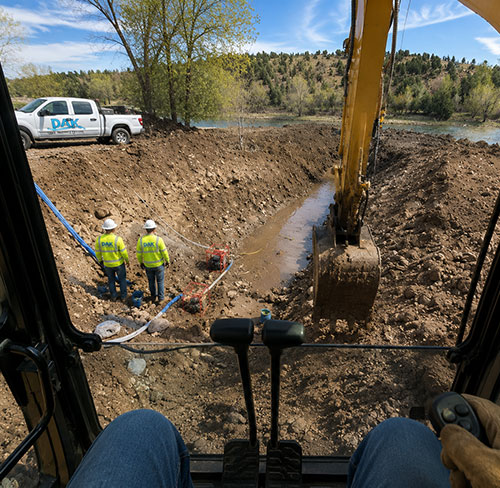
Gallery Well Construction Process
1. Site Evaluation & Groundwater Assessment
The first step is determining whether a property has suitable conditions for a gallery well. DAK Drilling evaluates factors such as groundwater availability, soil composition, alluvial deposits, proximity to rivers or streams, and anticipated water demand.
This assessment helps identify whether a gallery well is the most effective solution and determines the ideal location for the collection system.
2. System Design & Planning
Once favorable conditions have been confirmed, the gallery well system is designed based on the property’s specific requirements. This includes determining the length and layout of collection pipes, access structures, filtration materials, and pumping equipment.
The design process also considers future water needs, seasonal groundwater fluctuations, and site accessibility.
3. Excavation & Trench Construction
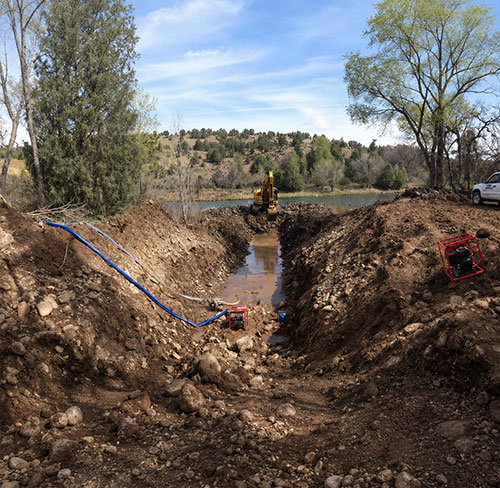
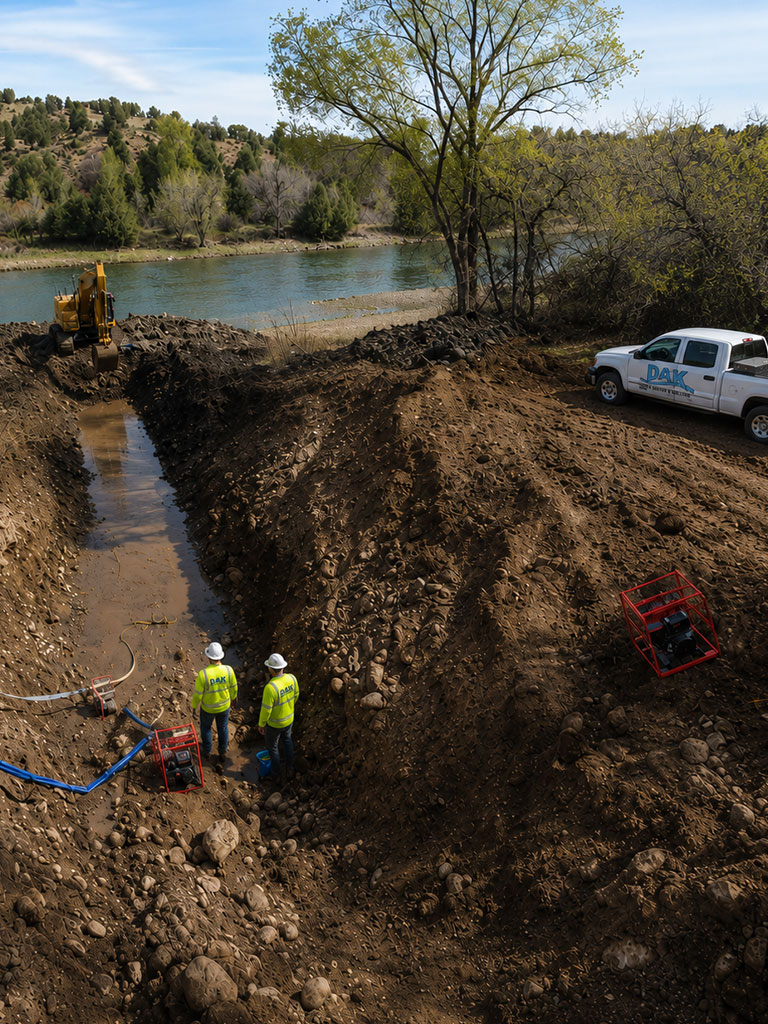
Unlike traditional water wells that are drilled vertically, gallery wells are typically installed within excavated trenches or collection zones located in productive alluvial deposits.
Excavation equipment is used to create the collection area where groundwater can naturally flow through permeable sand and gravel layers surrounding the system.
4. Installation of Collection Pipes
Perforated collection pipes are installed within the prepared trench system. These pipes are strategically placed to maximize groundwater capture while allowing water to naturally filter through surrounding sediments before entering the collection system.
The pipe network serves as the primary groundwater intake for the gallery well.
5. Placement of Filter Media & Gravel Pack
Specialized gravel and filtration materials are placed around the collection pipes to promote water flow while helping prevent sediment from entering the system.
This natural filtration layer plays an important role in protecting equipment and maintaining water quality over time.
6. Construction of Access Structures
An access vault, collection chamber, or monitoring structure is installed to provide access for inspections, maintenance, and pumping equipment.
These structures allow operators to monitor system performance and perform routine maintenance when necessary.
7. Pump Installation & System Connection
Once the collection system is complete, pumps, controls, and distribution components are installed to deliver water where it is needed.
Depending on the application, the system may supply residential, agricultural, commercial, or municipal water demands.
8. Testing & Performance Verification
Before the gallery well is placed into service, the system undergoes testing to verify water production capacity, flow rates, and overall performance.
Water quality testing may also be conducted to evaluate the suitability of the water source for its intended use.
9. Long-Term Operation & Maintenance
A properly designed gallery well can provide dependable water production for many years. Routine inspections, maintenance, and monitoring help ensure the system continues operating efficiently and allows potential issues to be identified before they become major problems.
Schedule Your Site Visit
Ready to Get Started?
Whether you’re building a new home, developing land, or upgrading your water system, DAK Drilling is here to help.
Contact us today to schedule your well inspection and consultation.
What is the difference between a gallery well and a traditional water well?
A traditional water well is drilled vertically into an underground aquifer to access groundwater. A gallery well uses a network of horizontal collection pipes installed in shallow alluvial deposits near rivers or streams. Both systems provide reliable water supplies, but the best option depends on your property’s geology, water demand, and location.
Do gallery wells produce more water than traditional wells?
In the right conditions, gallery wells can provide very high water production rates because they collect groundwater across a larger area. Properties located near productive river valleys and alluvial aquifers often benefit from gallery well systems when large volumes of water are required for irrigation, agriculture, or commercial use.
Are gallery wells common in Colorado and New Mexico?
Gallery wells are less common than traditional drilled wells but are widely used in areas with favorable groundwater conditions. They are often found near rivers, streams, and alluvial aquifers throughout Colorado and New Mexico where high-volume water production is needed.
How do I know if my property is a good candidate for a gallery well?
Properties located near rivers, creeks, or shallow groundwater deposits may be good candidates for a gallery well. Factors such as soil conditions, water demand, groundwater availability, and permitting requirements all play a role. DAK Drilling can perform a site evaluation to determine whether a gallery well is feasible for your property.
Is a gallery well more expensive than a traditional well?
The cost of either system depends on site conditions, construction requirements, water demand, and permitting considerations. In some situations, a gallery well may offer long-term advantages for high-volume water users, while a traditional well may be the most cost-effective solution for residential properties. A professional site assessment is the best way to compare options.
Can DAK Drilling help determine which well type is best for my property?
Yes. DAK Drilling evaluates groundwater conditions, property characteristics, water demand requirements, and local geology to recommend the most effective water supply solution. Whether a gallery well or traditional water well is the better choice, our team can help you make an informed decision based on your property’s specific needs.